


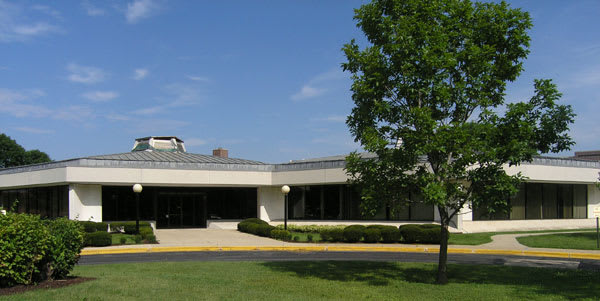



It can be hard to conceptualize the sheer amount of records in facilities like the National Archives at Chicago. This is why local archivist and librarian Gretchen Neidhardt came up with a helpful comparison.
“It’s 140,000 cubic feet, which is an enormous amount,” she said. “If you stacked it end-to-end, it would go from The Bean to Aurora.”
However, over the next few years those documents will be scattered across the country. In June, The National Archives and Records Administration (NARA) announced the impending closure of the regional archives and federal records centers in Chicago and San Bruno, igniting an outcry from local archivists.
“The impeding of access by moving the records farther away from the people most impacted by the records themselves is counter to my understanding of the mission of the National Archives,” said Veronica Pasfield, a researcher and a citizen of the Bay Mills Indian Community.
The National Archives were founded in 1934 to ensure the proper management of federal records. This currently includes vital documents from the Bureau of Indian Affairs (BIA), establishing relationships between Tribal Nations and the United States.
“BIA records were in barns…were in basements, were lost, had rats nesting in them…How do you have accountability that treaties are being honored, that tribal trust monies are being well managed, if the records that prove what happened are being used as nesting material for rats or are rotting away?” Pasfield said.
In a joint statement published October 14th from Indigenous organizations criticizing the closure, Larry Wright Jr., executive director of the National Congress of American Indians said that “moving these records out of the communities and regions they serve, risks making those records harder to access and less available to the Tribal Nations whose rights and history they document. The government cannot walk away from the historical record of its obligations to Indian Country.”
Another area of concern is the loss of the archivists themselves.
“One of the justifications [NARA has] given is that there will be personnel savings, which implies to us that there will be no additional personnel added,” Neidhardt said.
NARA claims the move will save over a million dollars a year with a majority of the records heading to Kansas City with remaining documents going as far as Fort Worth, Texas. But, there is no word yet on if the 17 employees at the Chicago office will be traveling with these records they know so well. This worries Pasfield.
“Sometimes, an archivist is the only one who actually knows. So, when we lose our archivist, we lose all of that institutional knowledge,” she said.
To prevent this loss, archivists are taking action. Chicago Area Archivists, a group for those in the career and adjacent professions, launched an anti-closure committee and has spent the past five months making their voices heard.
“We quickly got organized and with a number of Zoom meetings, got a petition out that people could sign to send to elected officials to try to put a stop to this closure, and also to ask for transparency,” said Newland Smith, a historiographer and member of the anti-closure committee.
While this type of activism is newer for Chicago Area Archivists, the work is not. “I really do pity anybody who takes on archivists because what they do for a living is find information, make it accessible and easy to access,” Pasfield said.
Eventually, elected officials did take notice. Illinois Representative Jesús García cosponsored the National Archives Protection Act in August which will seek to block the closure. A corresponding bill was also introduced in the Senate in September. As the new session of Congress just began November 9th, there are no new updates on the bills yet.
Smith hopes all lawmakers, both new and old, will be able to hear the alarm the archivists are sounding and take action, “the ability of citizens of this country to know their history, to access the records for this history…it’s vital to the health of our democracy.”
The Chicago facility is still slated for closure, but no matter Capitol Hill’s decision, the archivists and their allies will continue to fight to preserve our history.
For more updates on actions and news on the closure from the Chicago Area Archivists, check out their website at www.chicagoarchivists.org/news.